


The Eurovision Song Contest has become a major platform for many competing countries to embrace their own culture, traditionality and languages on an international stage, watched by hundreds of millions of viewers.
From an initial seven participating countries in 1956, the Eurovision Song Contest has welcomed 52 countries that have participated during the contest’s 69-years; being watched by an average of 160 to 180 million viewers each year, making Eurovision a perfect platform to showcase a country’s own culture, as well as, national languages to an international audience.
Every year, a significant proportion of countries utilise different elements of their cultures in their entries and performances, whether that be through the songs, language and staging. The St. Jakobshelle will witness 20 languages grace the stage from across the 37 competing countries – the highest number of languages since 1998, the last time 20 languages featured at the contest.
Over the course of the next few weeks, Eurovoix will take a deep dive into the array of cultural and ethnic elements showcased at Eurovision 2025, through the languages, songs and staging.
Today’s article takes an in-depth look at the 20 languages that will be sung, throughout Eurovision week. During Eurovision’s 69-year history, 57 languages have been sung from a collection of 52 participating nations, from Arabic and Macedonian to Polish and Yankunytjatjara – there has been a diverse amount of national and other foreign languages sung at the Eurovision Song Contest.
Albanian
A country that is commonly known to embrace their cultural identity at the Eurovision Song Contest is, of course, Albania. Representing the West Balkan nation this year will be Shkodra Elektronike and their eccentrically ethnic entry “Zjerm (Fire)”. The song is sang wholly in Albanian and will be their 11th entry to feature the Albanian language.
While out of their 21 years at the song contest, only 11 of their songs have been sang in or feature Albanian. But in the last decade, 6 out of 10 of their entries have been sang in their national language with 4 of them qualifying through to the final. The country is also known to revamp their songs most years, which many entries undergoing added lines in English or changing completely in English. However, “Zjerm” has not undergone any such revamp and has stayed true to it’s original identity.

Armenian
This will be the 7th time Armenian has featured at the Eurovision Song Contest. PARG’s entry “Survivor” will include a line of Armenian within the final bridge of the song. The confirmation of a revamp of added Armenian came a few weeks after PARG won his national final. The Armenian language is one of the oldest Indo-European languages still spoken today, with origins of the language from around the 6th BC.

English
Once again, the United Kingdom sends an entry in its national language. English is of course the most common language to be performed at the Eurovision Song Contest. At the 2025 contest, 19 entries will be performed in English or at least will also feature as secondary language in their song.
For many who aren’t aware, between 1977 to 1998 there was a rule that countries must send songs in their national language only – which meant Malta, Ireland and the United Kingdom were the only countries who could send songs in English, during this time, as the language was their or one of their national languages. From 1999 onwards, any country could send songs in English due to the growing international audiences.

Finnish
The Finnish language returns to the Eurovision Song Contest after a one-year hiatus, with Käärijä’s “Cha Cha Cha” being their previous entry in Finnish. This year Erika Vikman with her German-titled entry “Ich Komme” will be performed wholly in Finnish, as well as bits of German. “Ich Komme” will be the 35th song for Finland in Finnish.
However, another song that contains a few words in Finnish is in fact, Sweden’s entry “Bara Bada Bastu” – (shocker we know, but more on that later down this article).

French
Five entries at the 2025 Eurovision Song Contest will be sung in, or at least feature, French – while France, Luxembourg and Switzerland with sing wholly in French, Israel and the Netherlands feature portions of their entries in French. Australia will also contain one line during its final bridge.
For France, this is the 65th time their entry was sung in their national language, while for Luxembourg, this is the 38th time they have sent an entry in French. Along with English, French is one of the most common languages at the contest and is one of the languages which Eurovision is presented in.

Georgian
For the first time since “Keep On Going (Sul tsin iare)” in 2019, the Georgian language returns to the Eurovision Song Contest as Mariam Shengelia sings her song “Freedom” in both English and Georgian. Georgia has mostly opted to send songs in English rather than their own national language, but “Freedom” will become the fourth entry in Georgia’s participation history to contain Georgian.

German
You might be surprised to know that Germany will be singing their entry completely in German at Eurovision 2025. This will be the first time since 2007 that Germany will be represented by a song that is sung wholly in their native language. However, another country to feature German this year is Finland’s entry “Ich Komme”.
Greek
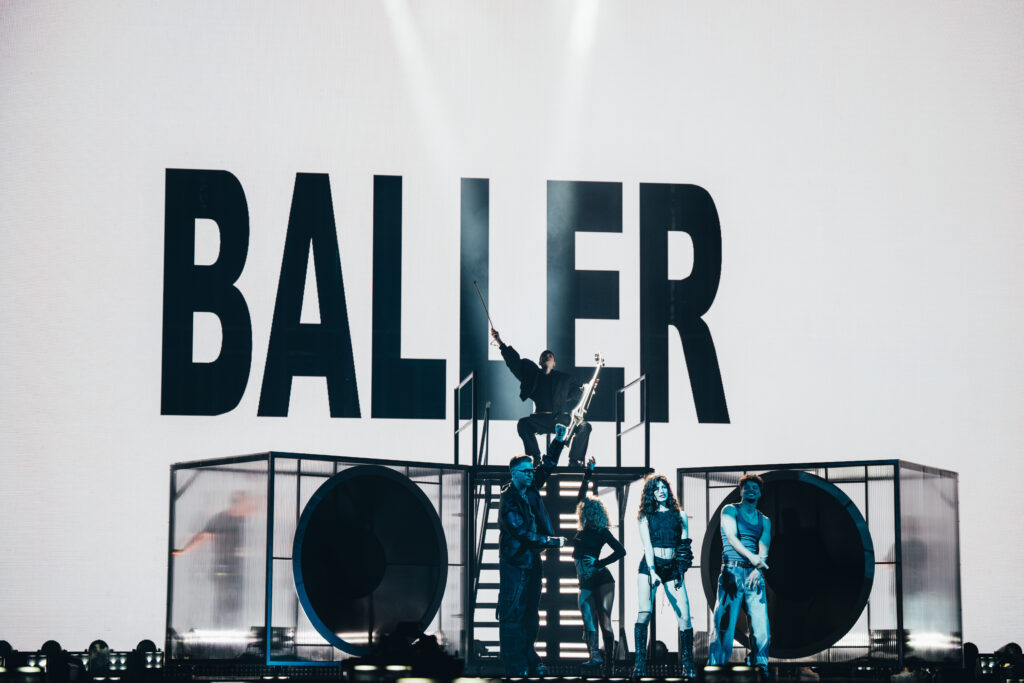
For a second year in a row, Greece will be sending an entry in Greek, fronted by singer Klavdia with her song “Asteromata”. This will be the 30th time at the Eurovision Song Contest that Greece sends an entry in Greek, and while in the last three decades English has become the dominant language for Greece’s Eurovision entries, it does seem that with Marina Satti’s success last year, Greece will want to continue a streak of sending songs in their native language.

Hebrew
For a third year in a row, Hebrew will feature in the Israeli entry at the Eurovision Song Contest, with the middle verses of “New Day Will Rise” will be sung in Hebrew. Israel has mostly often sent entries that are sung in both English and Hebrew during their participation history. However, the last time an Israeli entry was sung completely in Hebrew was in 2013.
Icelandic
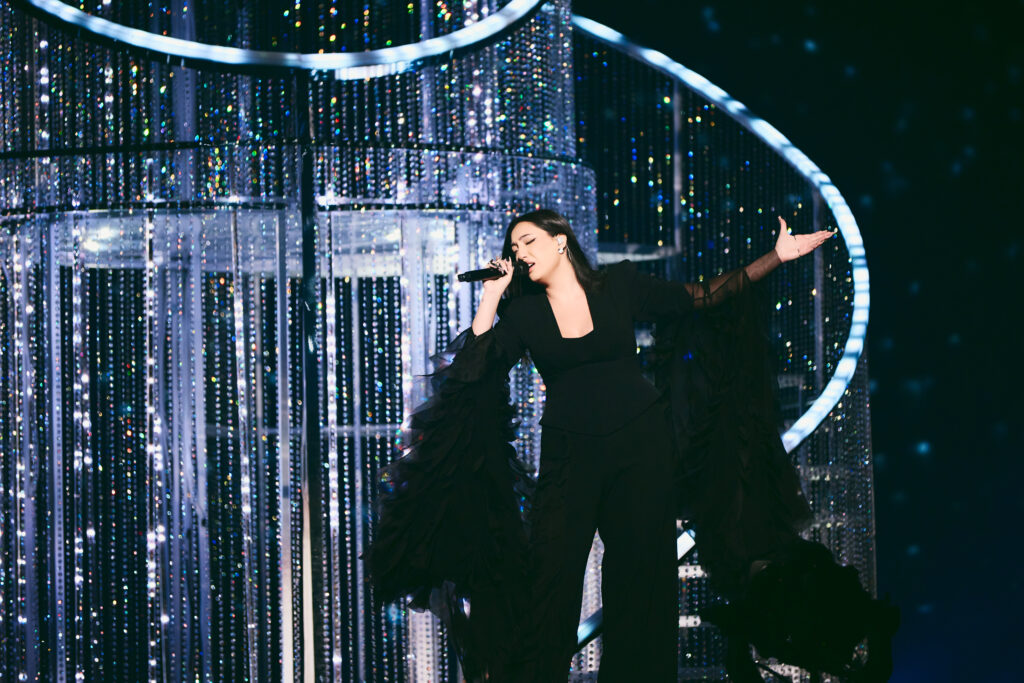
Icelandic returns to the Eurovision Song Contest for the first time since 2022 and their entry “Með hækkandi sól”. Interestingly, Iceland has always qualified for the Grand Final whenever they sing in their native language. This year’s Icelandic representatives, Væb, knew this fact about qualification and opted to keep their song “Róa” in Icelandic, as well as it being important to showcase their identity. This will be the 16th entry of Iceland to be in its native language.

Italian
Italy is one of several countries that consistently send their Eurovision entries in their native tongue and 2025 is, of course, no different. This year, they are represented by Lucio Corsi and his song “Volevo essere un duro”. Ever since their first participation in 1956 up until 2025, all of Italy’s entries have been sung in Italian, with only a small handful featuring English.
In addition to Italy, two other countries will also be sending entries in Italian – Estonia and (of no surprise too) San Marino. Estonia’s entry, “Espresso Macchiato” is an ode to Italian culture, performed by Tommy Cash. While San Marino’s entry “Tutta l’Italia”. “Tutta l’Italia” was originally the theme song of Sanremo 2025 but ended up competing and winning the San Marino selection.

Latvian
Another surprise returnee language this year is Latvian. Latvian will feature at the contest after a one-year hiatus after “Aijā” by Sudden Lights in 2023. However, this will be the first time in 2004 since a song representing Latvia will be sung completely in Latvian. Tautumeitas will represent Latvia in Basel this year with their ethereal entry “Bur man laimi”.
Their first and only other entry, wholly in Latvian, in 2004 failed to qualify, as well as Sudden Lights, but taking into account the considerable momentum surrounding Tautumeitas, Latvian could feature for the first time at a Eurovision Grand Final.

Lithuanian
In the last few years, Lithuania has found a formula for finishing in the top 15 – sending entries in their national language: Lithuanian. For the fourth year in a row since 2022, Lithuania has sent a song in Lithuanian – and this year they are represented by the band Katarsis and their entry “Tavo Akys”. Since first participating in Eurovision, Lithuania has mostly sent songs in English; however, with the recent success of Lithuanian-language entries, there is a growing national pride in continuing to send their entries in their native tongue.

Montenegrin
Montenegro will return to the Eurovision Song Contest after a two-year break, represented by one of two returning artists this year: Nina Žižić. She will sing her entry “Dobrodošli” completely in Montenegrin; this was a requirement in the selection of Montenegro’s 2025 national final, that all songs must be sung in the national language. “Dobrodošli” will be the 7th entry of Montenegro at Eurovision to feature Montenegrin.

Polish
Like Georgian, Polish returns to the Eurovision Song Contest for the first time since 2019, when they were represented by Tulia and their song “Fire of Love (Pali się)”. This year, Poland will be represented by returnee artist, Justyna Steczkowska and her mystically hypnotising entry “GAJA”. The song is mostly performed in Polish, however also contains a verse in English. Poland has mostly chosen to send songs in English to the contest, as “GAJA” will become the 12th entry of Poland in its national language.
Portuguese
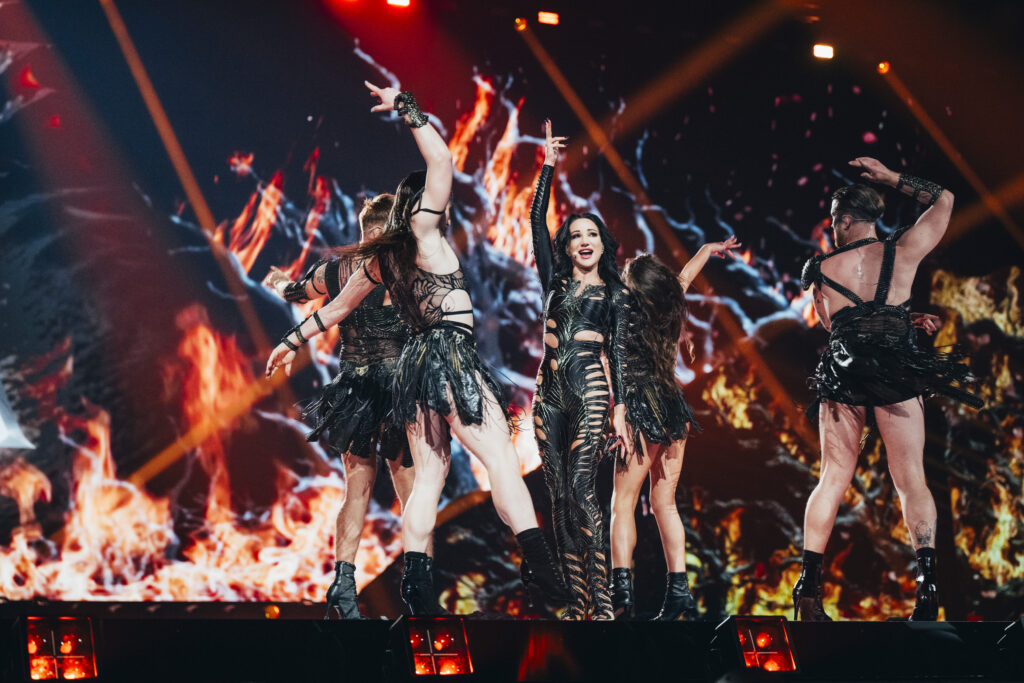
Portugal is also another country that has always tended to send their Eurovision entries in Portuguese, barring 2021. The Iberian nation has usually always sent songs that are true to their cultural identity. 2025 will see band NAPA grace the St Jakobshelle stage with their tranquil entry “Descolado”.

Serbian
Since debuting as an independent country in 2007, Serbia almost always sent entries sung wholly in Serbian, with some entries featuring English or other languages. Since 2018, Serbia has continued its streak of sending songs in Serbian with 2025’s “Mila”, fronted by Princ, being the most recent entry in the native language. The Serbian language has mostly always qualified for the Grand Final, making it a staple language to always hear for the hundreds of millions watching.

Spanish
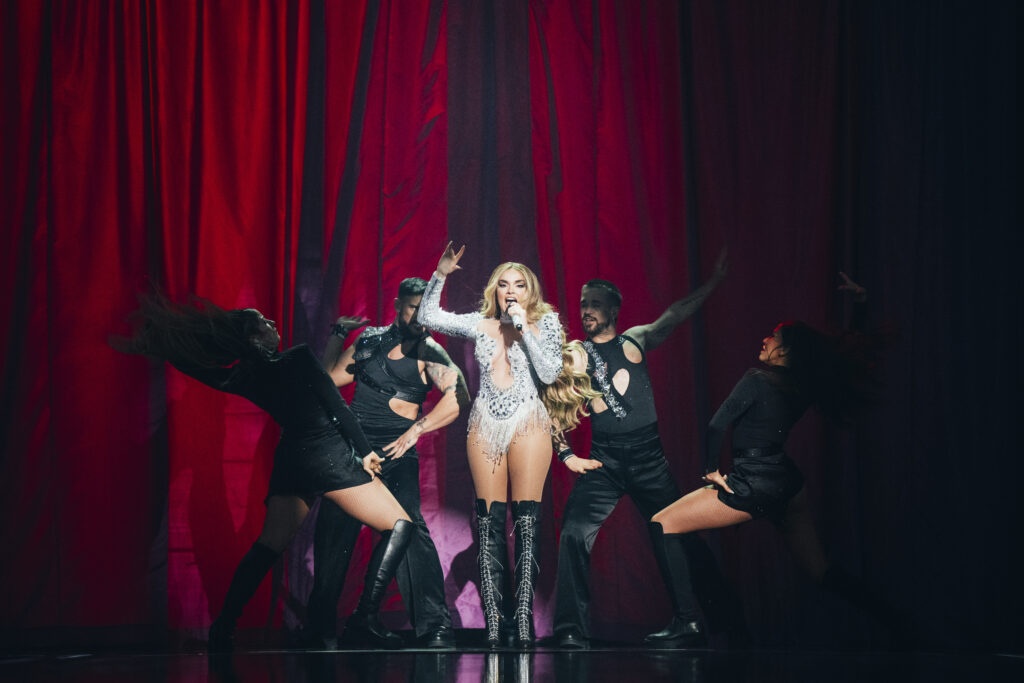
Spanish is another language that is commonly heard at the Eurovision Song Contest. Spain’s Eurovision 2025 entry “Esa Diva”, which is fronted by pop-singer Melody, is their 65th entry at the song contest and is sung wholly in Spanish. Out of their 65 entries at the song contest, only 1 entry has ever been sung completely in English, with a few other entries featuring English.
Swedish
The biggest surprise we can all agree on this year is that Sweden will not be sending an entry in English, at all – but in Swedish. The last time Sweden sent a song in the Swedish language to the Eurovision Song Contest was in 1998. In another twist, they will also be represented by the Finnish group KAJ who hail from the Swedish speaking region of Finland – Vörå. KAJ’s entry “Bara Bada Bastu” is sang wholly in Swedish, with some verses in the Finnish dialect of Swedish, as well as some lines in Finnish.

Ukrainian
Ukraine is one of the most successful countries at Eurovision, with the country being only one of two nations to hold a 100% qualifying streak at the song contest. The Eurovision Song Contest has always been an important and vital platform for Ukraine to embrace representing their culture, identity and traditionality to wider international audiences, particularly now more than ever.
During Ukraine’s participation history at the contest, they have sent songs in English, in Ukrainian or mixed with other languages like Crimean Tatar in 2016. “Birds of Pray”, fronted by Ziferblat, is the latest Ukrainian entry at Eurovision, with the song sang both in Ukrainian and English.

Speaking in national and native language has always been an important element of representing one’s culture and for Eurovision, languages have been a defining feature of the contest’s uniqueness. For many individuals and communities, language has always been a massive part of their individuality – strengthening and embracing their strong cultural identity and upbringing.
Here are some other language facts:
- Originally, earlier in the 2025 season, Maltese was set to be featured at the contest, with Malta’s entry “Kant (Singing)” – which has been revamped to “Serving” which no longer contains the Maltese word. If the song was not changed, this could have been the first time since 1975 that Maltese would feature at the Eurovision Song Contest.
- Several languages that were sang at Eurovision 2024 that did not return for another year, these include: Aramaic, Azerbaijani, Dutch, Estonian, Norwegian, Slovene and Yankunytjatjara.
Image Source: Alma Bengtsson / EBU